Micropipette Guide 2025: Types, Applications, Working, Calibration & Buying Guide – By Labolit

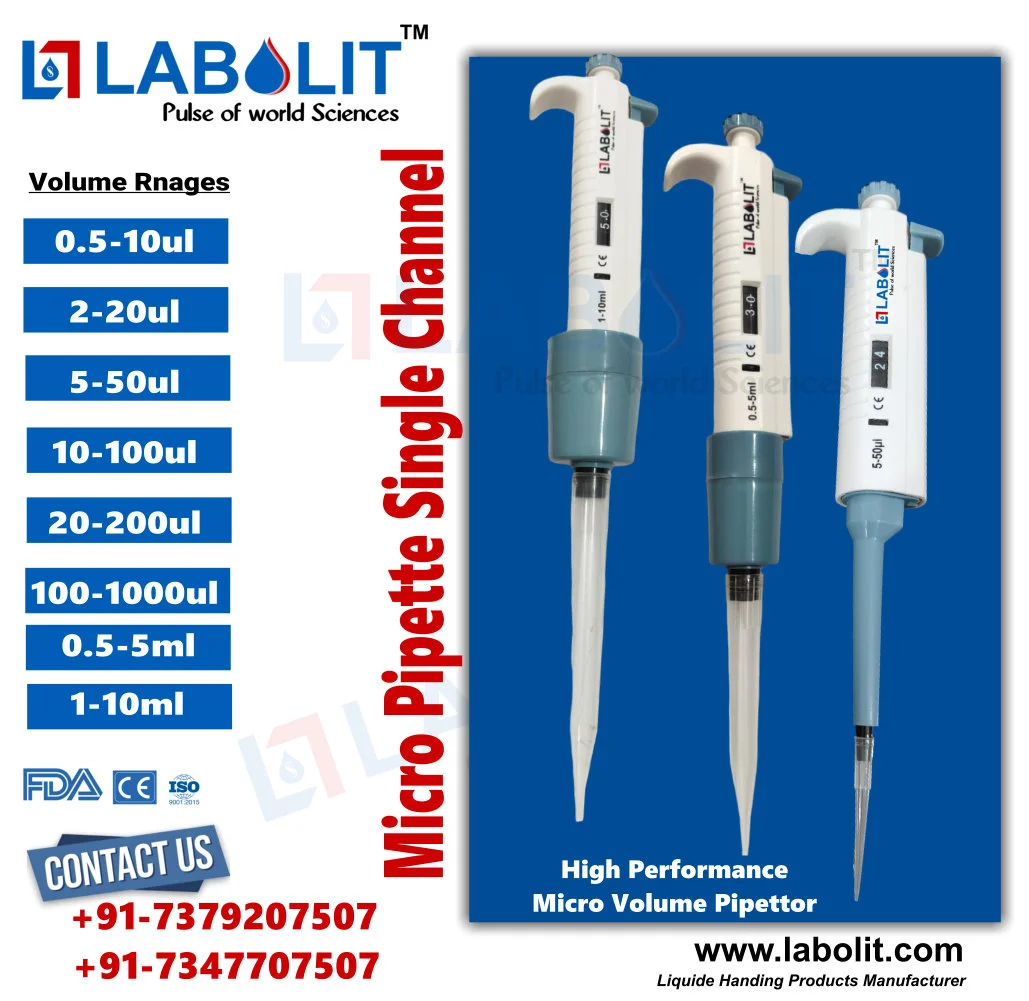
Micropipettes are essential laboratory instruments used to accurately measure and transfer very small liquid volumes ranging from 1 µL to 10,000 µL. They are indispensable tools across life sciences, pharmaceuticals, diagnostics, research laboratories, hospitals, and academic institutions.
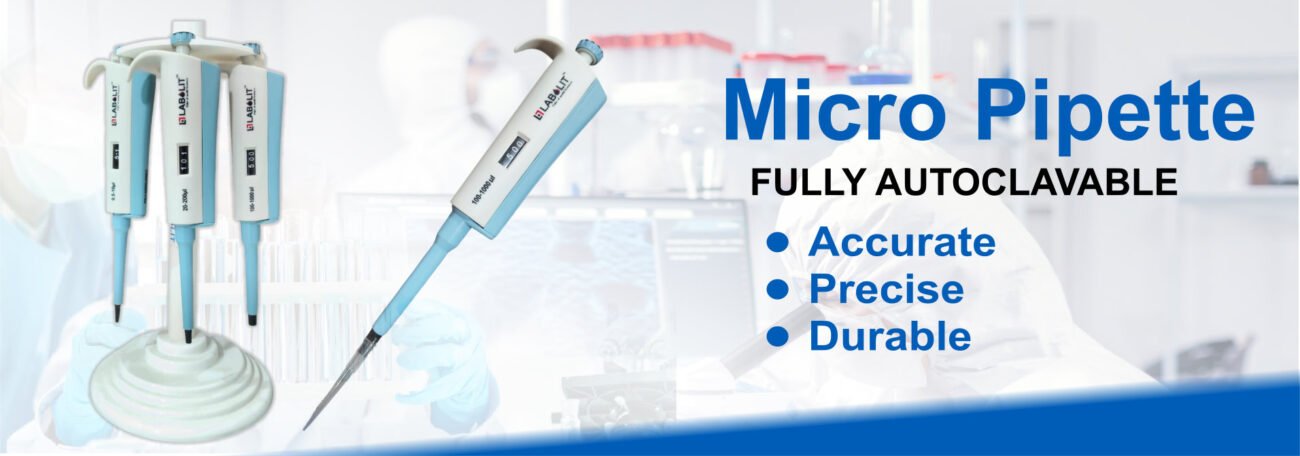
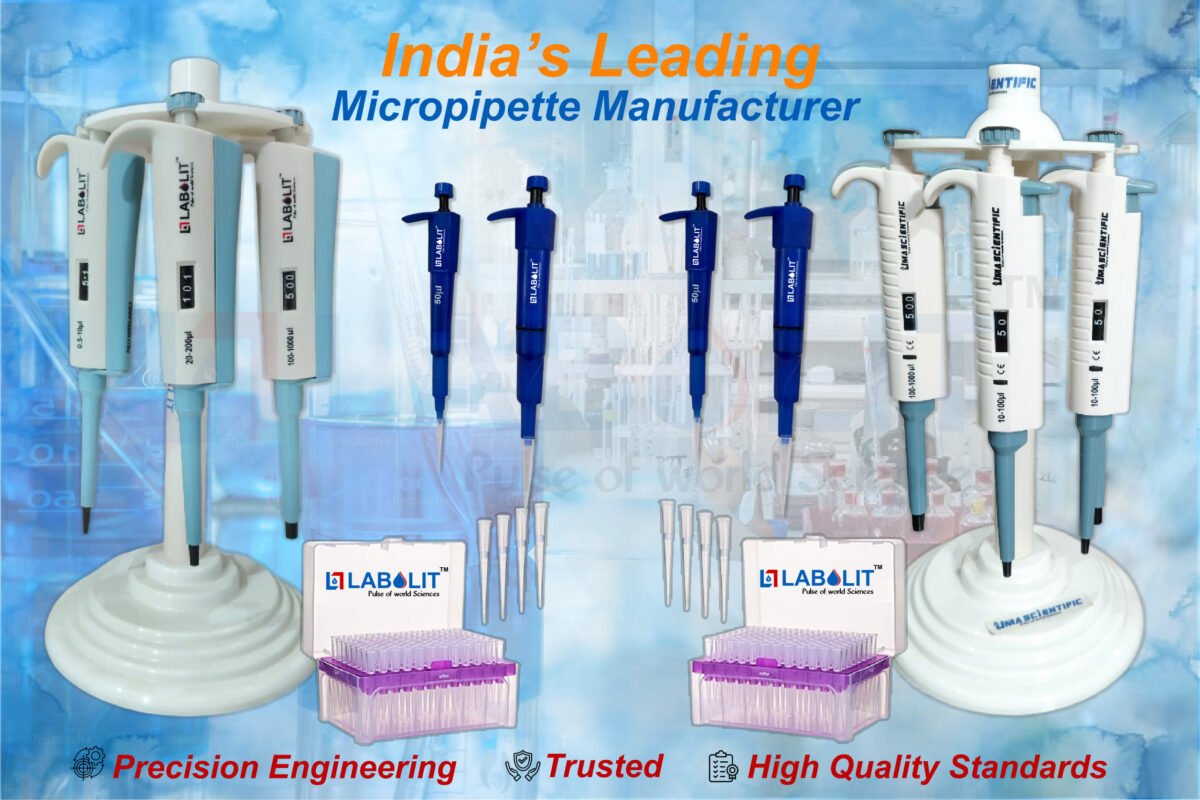
At Labolit, we design and manufacture high-precision, ergonomically advanced micropipettes that meet the demanding requirements of modern laboratories. Our instruments combine accuracy, durability, comfort, and reliability, making Labolit a trusted name in laboratory liquid handling solutions across India and beyond.
📞 Sales: +91 7347707507 / +91 7379207507
📞 Complaint/Service: +91 7348107507
📧 Email: sales@labolit.com
What is a Micropipette?
A micropipette is a precision laboratory instrument used to aspirate and dispense small volumes of liquid with high accuracy and repeatability. It functions using the air displacement principle, allowing scientists to perform sensitive experiments with confidence and consistency.
From molecular biology to clinical diagnostics, micropipettes form the backbone of experimental success — and Labolit micropipettes are engineered to ensure performance you can trust, even during long hours of repetitive pipetting.
Types of Micropipettes
Micropipettes can be classified in several ways based on channels, volume adjustment, and operating mechanism.
1. Based on Number of Channels
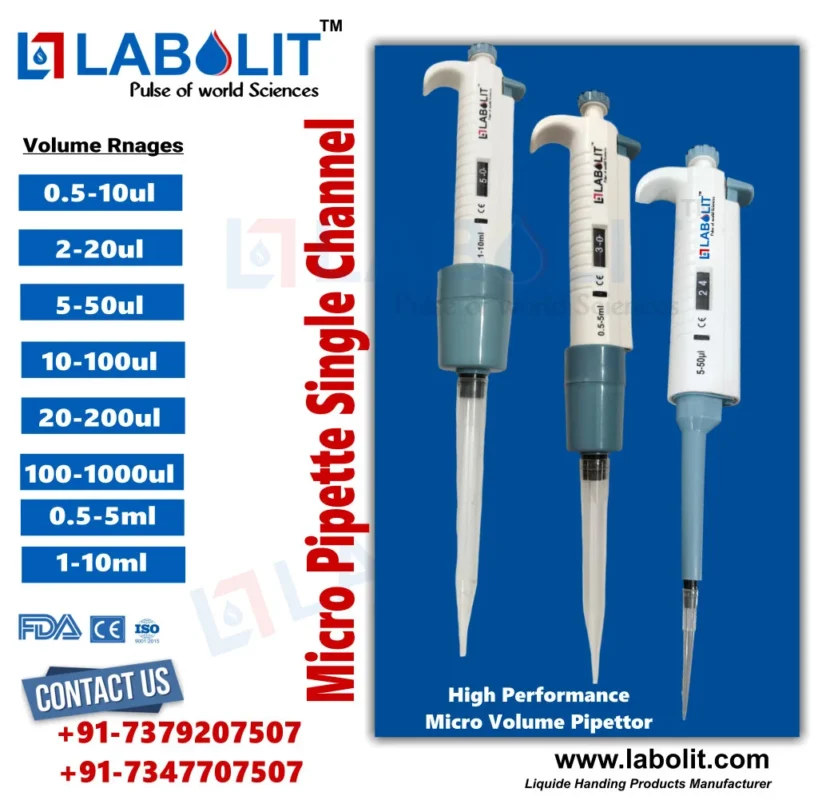
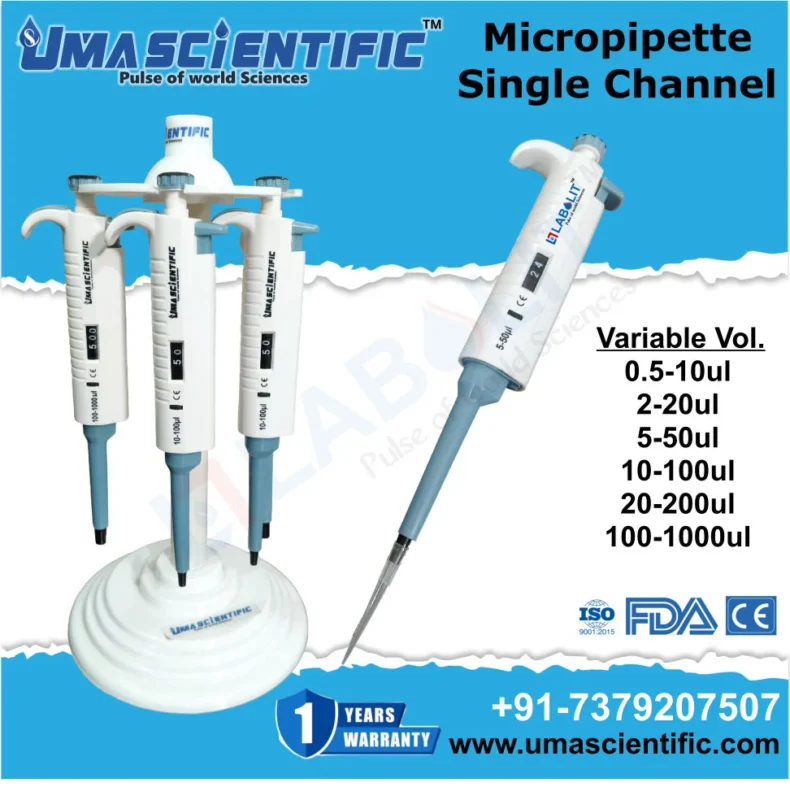
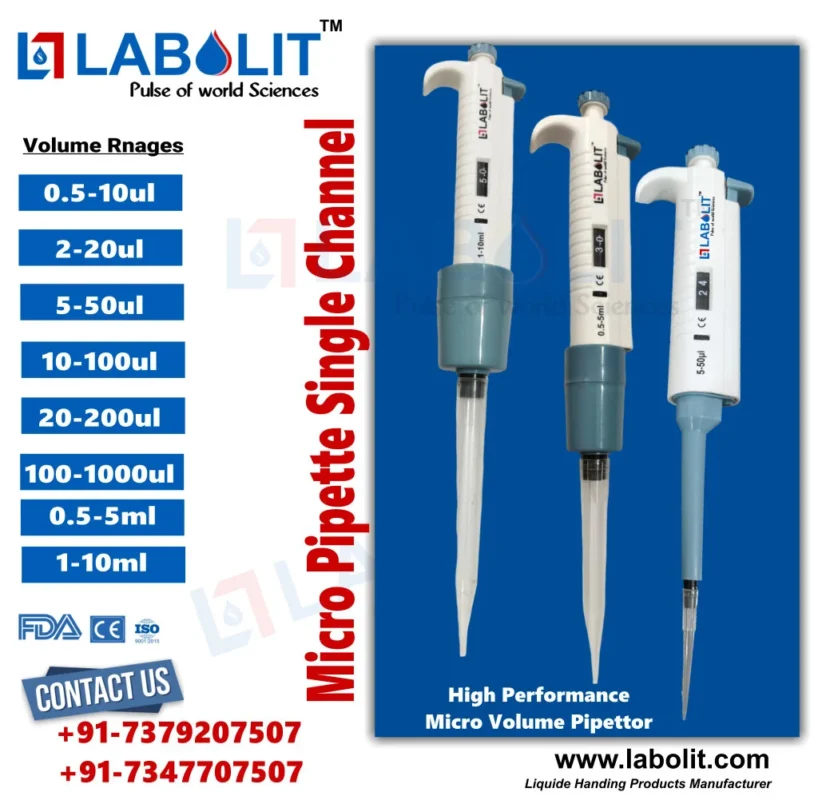
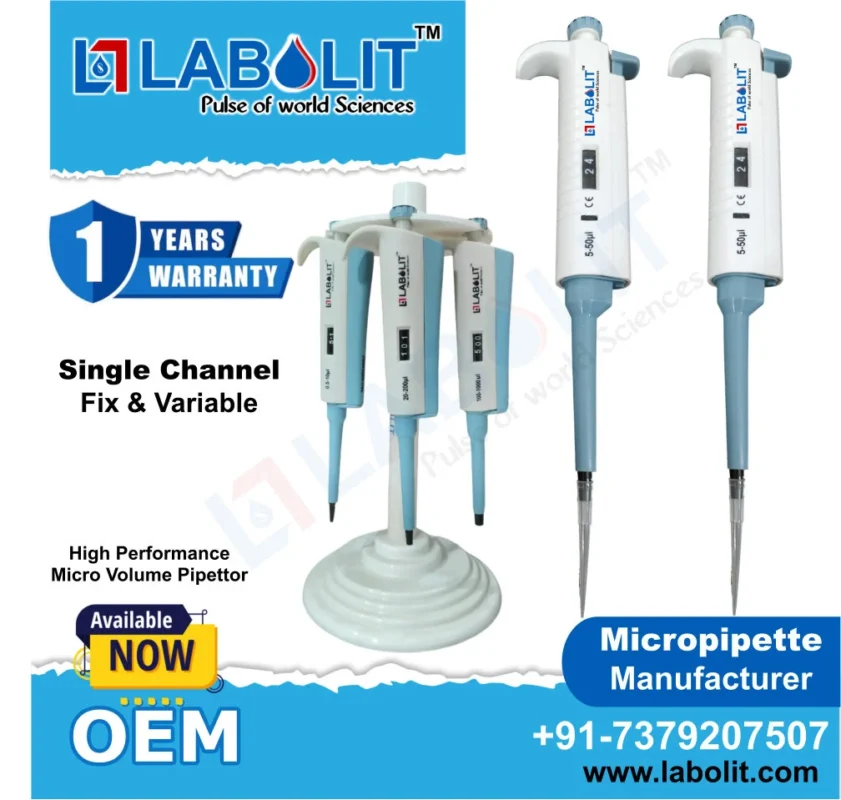
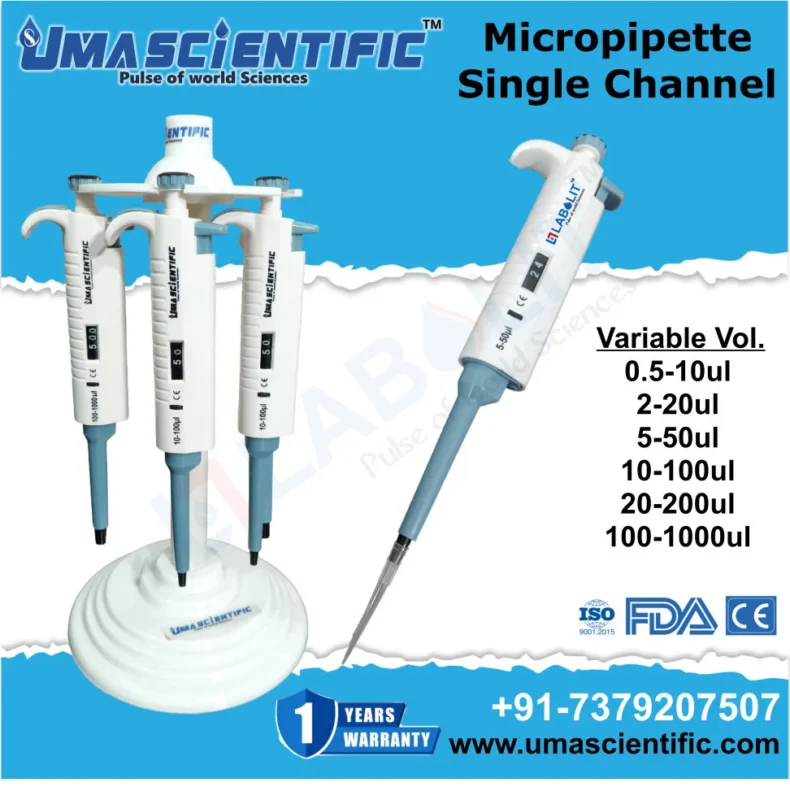
Single Channel Micropipettes
Single-channel micropipettes aspirate and dispense liquid through a single tip, making them ideal for:
- Individual sample handling
- Precision research work
- Routine laboratory tasks
Labolit single-channel micropipettes deliver outstanding accuracy, smooth plunger movement, and fatigue-free operation — perfect for everyday lab use.
Multi-Channel Micropipettes
Multi-channel micropipettes typically come in 8-channel, 12-channel, or 16-channel formats, allowing multiple samples to be pipetted simultaneously. They are essential for:
- Microplate work
- High-throughput screening
- ELISA and PCR workflows
Labolit multi-channel micropipettes ensure uniform liquid delivery across all channels, reducing variability and improving productivity in high-volume laboratories.
2. Based on Volume Adjustment
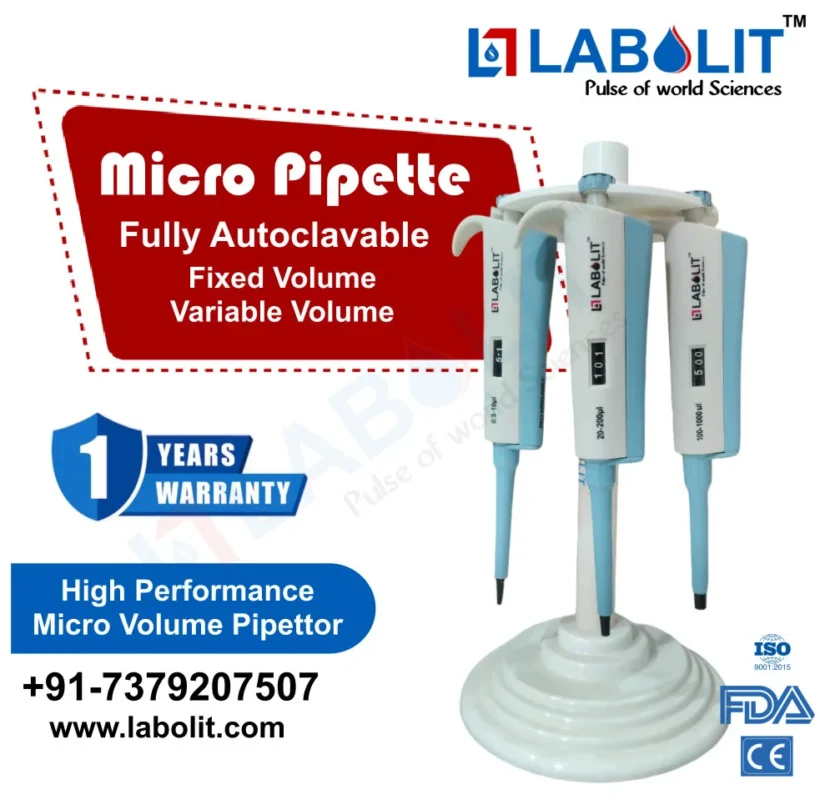
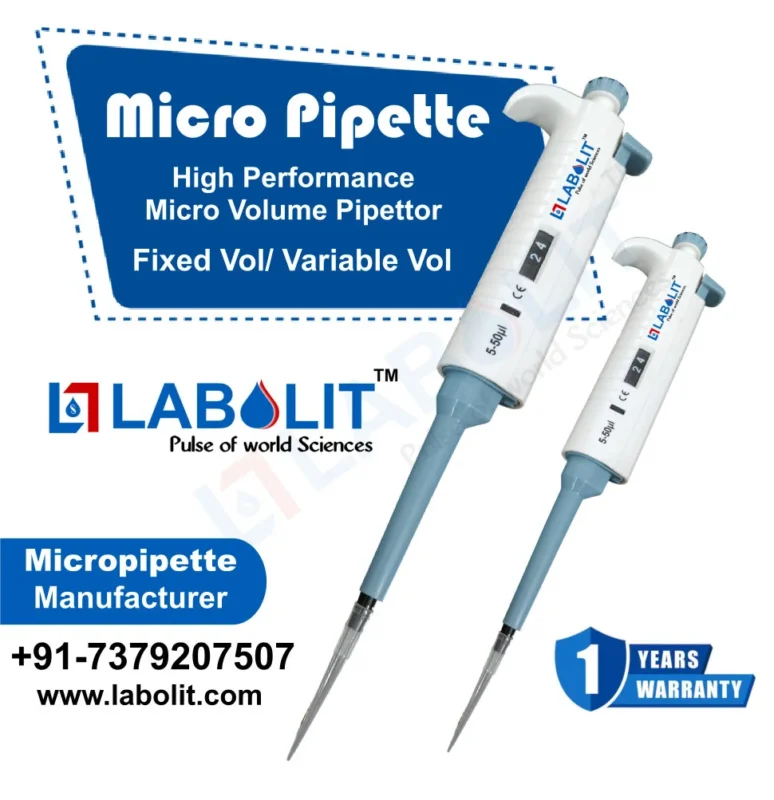
Fixed Volume Micropipettes
Fixed volume micropipettes dispense only one preset volume. These are ideal for repetitive tasks where consistency is critical, such as:
- Routine diagnostic testing
- Quality control labs
- Standard assay preparation
Labolit fixed volume micropipettes are factory calibrated for maximum reliability and minimal deviation.
Variable Volume Micropipettes
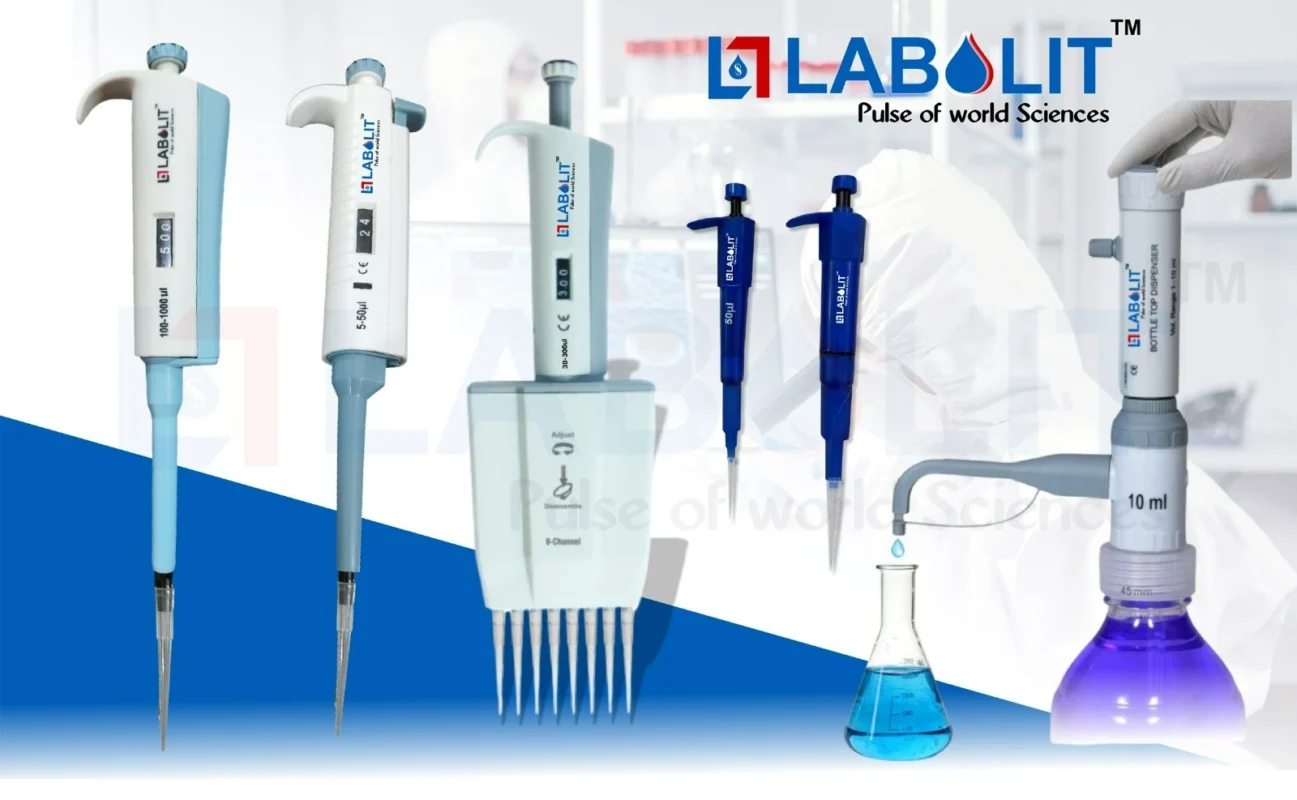
Variable volume micropipettes allow users to select different volumes within a defined range using an adjustable dial. These are widely used due to their flexibility and convenience.
Labolit variable volume micropipettes feature:
- Smooth, precise volume adjustment
- Secure volume locking
- Clear, easy-to-read displays
They are perfect for research labs requiring accuracy across varying sample volumes.
3. Based on Operating Mechanism
Mechanical Micropipettes
Mechanical micropipettes operate using a piston-driven plunger system. The user manually controls aspiration and dispensing by pressing the plunger.
Labolit mechanical micropipettes are designed with:
- Low-force plungers
- High chemical resistance
- Excellent durability
They are ideal for routine lab operations where consistent performance is required.
Electronic Micropipettes
Electronic micropipettes use motor-driven pistons with digital controls, offering:
- Higher reproducibility
- Programmable pipetting modes
- Reduced operator fatigue
Labolit electronic micropipettes are perfect for high-throughput labs and critical workflows where precision and consistency are essential.
Main Components of a Micropipette
Understanding micropipette components helps ensure correct use and long-term performance.
1. Plunger
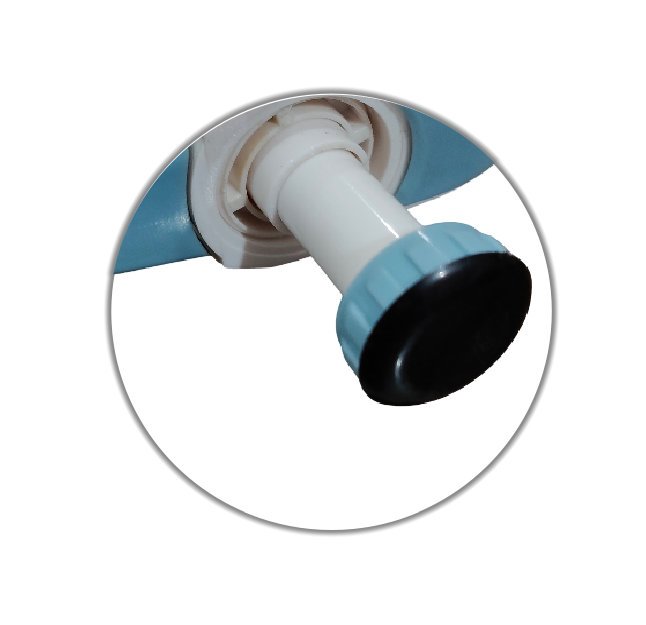
The plunger is pressed using the thumb to aspirate and dispense liquid.
- First stop: Aspirates liquid
- Second stop (blow-out): Expels remaining liquid
Labolit micropipettes are engineered with low-force plungers to reduce strain and minimize repetitive stress injuries during extended use.
2. Volume Adjustment Dial
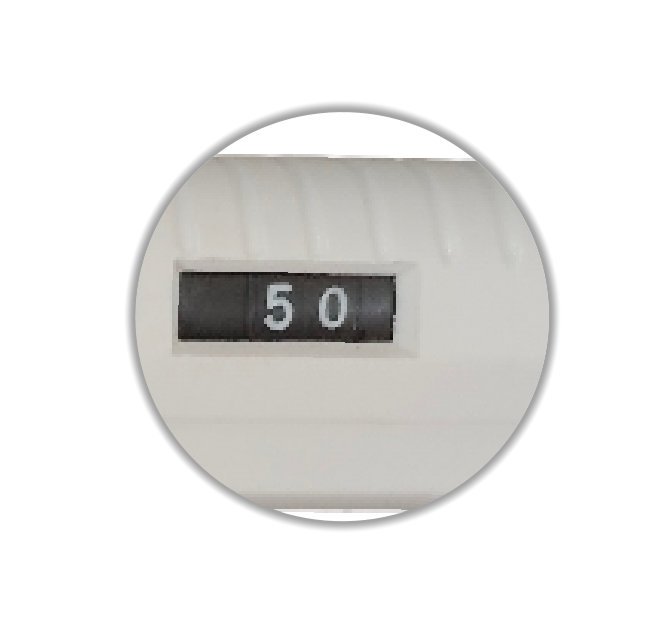
The volume dial controls piston movement and determines the volume aspirated. Labolit designs ensure:
- Smooth rotation
- Clear numerical display
- Secure locking for consistent results
3. Tip Ejector
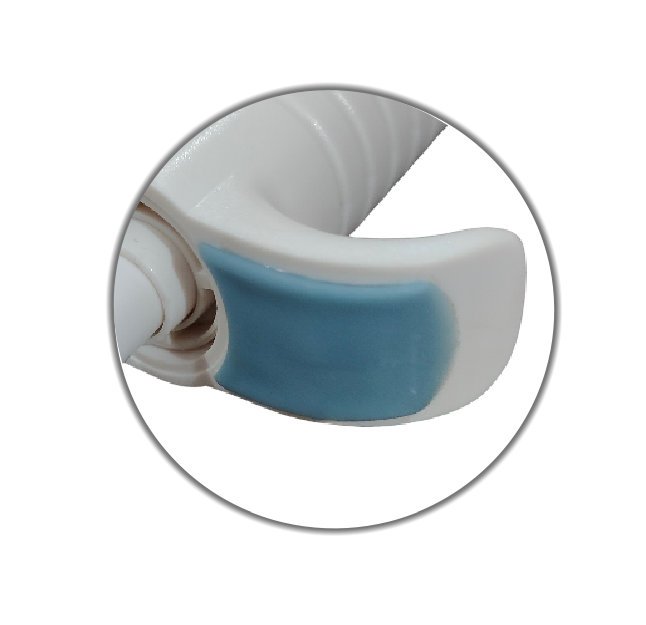
The tip ejector allows safe, contamination-free disposal of used tips. Labolit micropipettes feature ergonomic ejector buttons for effortless operation.
4. Tip Cone (Shaft)
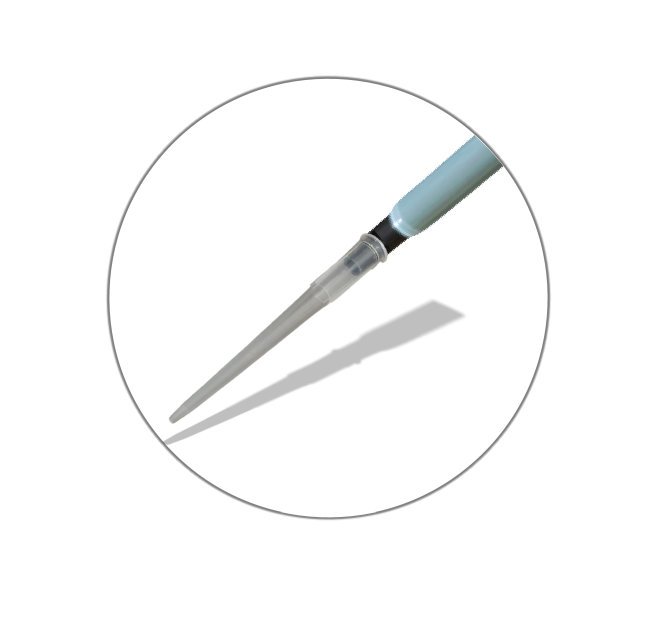
The tip cone holds the disposable pipette tip and ensures an airtight seal. Labolit tip cones are precision-engineered for:
- Leak-proof performance
- Compatibility with universal tips
- Secure attachment and release
5. Calibration Screw
The calibration screw allows fine-tuning of volume delivery. Labolit micropipettes are factory-calibrated and easy to recalibrate when needed to maintain ISO compliance.
Applications of Micropipettes in Laboratories
Micropipettes are used wherever precise liquid handling is required. Some of the most common applications include:
- Molecular Biology
- Biochemistry
- Cell Culture
- Microbiology
- Analytical Chemistry
- Clinical Diagnostics
- Pharmaceutical Research
- Environmental Testing
- Food & Beverage Quality Control
Labolit micropipettes are trusted by laboratories across all these fields for their consistent performance and long-term reliability.
How Does a Micropipette Work?
Micropipettes operate using the air displacement principle:
Filling (Aspiration)
When the plunger is pressed to the first stop, the internal piston displaces a fixed volume of air. Upon releasing the plunger, a vacuum forms, drawing liquid into the tip.
Dispensing
Pressing the plunger again releases the liquid. Pressing to the second stop expels any residual liquid, ensuring accurate volume transfer.
Labolit micropipettes are engineered for smooth piston movement, minimal friction, and exceptional accuracy.
How to Use a Micropipette Correctly
Step 1: Choose the Right Micropipette and Tips
Select a micropipette suitable for your required volume range. Always use compatible, high-quality tips. Labolit micropipettes are designed for universal tip compatibility.
Step 2: Attach the Tip
Firmly attach the tip without excessive force to ensure a leak-proof seal.
Step 3: Pre-Wet the Tip
Aspirate and dispense the liquid 2–3 times before final measurement to improve accuracy.
Step 4: Forward Pipetting Technique
- Press plunger to first stop
- Immerse tip vertically into liquid
- Slowly release plunger
- Place tip against vessel wall
- Press plunger to first stop to dispense
- Press to second stop to expel remaining liquid
Step 5: Reverse Pipetting Technique
Used for viscous, foamy, or very small volumes:
- Press plunger to second stop
- Immerse tip and release slowly
- Dispense by pressing only to first stop
- Discard remaining liquid with the tip
Labolit micropipettes perform excellently in both forward and reverse pipetting techniques.
Calibration of Micropipettes
Micropipette calibration ensures volume accuracy and is usually performed using gravimetric testing (weighing water).
General Calibration Steps
- Gather materials
- Micropipette
- Tips
- Distilled water
- Analytical balance
- Gloves and lab coat
- Prepare the micropipette
- Ensure cleanliness
- Attach fresh tip
- Pre-wet tip (if recommended)
- Set desired volume
- Dispense water into weighing container
- Record weight
- Convert weight to volume using water density
- Compare measured volume to expected volume
- Adjust if necessary using calibration screw
- Record all calibration data
- Perform final accuracy check
Labolit micropipettes are designed for easy calibration and long-term volume stability.
When is Micropipette Calibration Required?
Calibration is recommended:
- Before first use
- At regular intervals (every 3–6 months for frequent use)
- After servicing or repairs
- When working conditions change (temperature, altitude)
- To meet regulatory or ISO compliance requirements
Labolit offers expert guidance and support for micropipette calibration and servicing.
Cleaning and Maintenance of Micropipettes
External Cleaning
- Remove tip ejector and wipe clean
- Clean body, buttons, shaft, and surfaces with lint-free cloth
- Use soft brush for stubborn debris
- Reassemble and allow to dry
- Final wipe with isopropanol
Internal Cleaning
Should only be done by trained personnel:
- Disassemble carefully
- Clean internal parts with alcohol wipes
- Allow complete drying
- Lubricate seals and piston if required
- Reassemble as per manual
General Maintenance Tips
- Store pipettes upright
- Inspect daily before use
- Clean tip cone regularly
- Use only isopropanol for cleaning
- Perform internal inspection every 3 months if used daily
Labolit micropipettes are built for durability and easy maintenance, ensuring long operational life.
Choosing the Right Micropipette for Your Application
When selecting a micropipette, consider:
- Required volume range
- Accuracy and precision
- Universal tip compatibility
- Autoclavability
- UV resistance
- Ergonomic comfort
- ISO calibration compliance
- Long-term reliability
Labolit micropipettes are engineered to exceed these requirements, offering:
✔ High accuracy & repeatability
✔ Low-force plunger & tip ejection
✔ Lightweight ergonomic design
✔ Chemical resistance
✔ Long calibration stability
Ergonomics is especially critical — repetitive pipetting can lead to strain injuries. Labolit micropipettes are specifically designed to reduce thumb fatigue and wrist stress, even during extended use.
Why Labolit is the Best Micropipette Manufacturer
Labolit is a leading manufacturer of laboratory liquid handling instruments, offering:
- World-class precision engineering
- Superior ergonomic designs
- ISO-compliant calibration standards
- Long-lasting durability
- Reliable after-sales support
Our micropipettes are trusted by:
- Research institutes
- Diagnostic laboratories
- Pharmaceutical companies
- Universities
- Hospitals
When accuracy matters, laboratories choose Labolit.
📞 Sales: +91 7347707507 / +91 7379207507
📞 Service: +91 7348107507
📧 Email: sales@labolit.com
Micropipette FAQs
1. Can I use any brand of pipette tips with my Labolit micropipette?
Yes. Labolit micropipettes feature universal tip cones compatible with most standard tips, provided the tip volume range matches the pipette.
2. What is the best way to sterilize my micropipette?
If your Labolit micropipette is autoclavable, follow the manufacturer’s temperature and time recommendations. Otherwise, surface disinfection using approved agents is recommended.
3. How can I quickly check if my micropipette is calibrated?
Dispense water five times at the set volume and weigh it. If results match ISO tolerance limits, your micropipette is properly calibrated.
4. How often should I recalibrate my micropipette?
For regular use, every 3–6 months is recommended. ISO standards suggest annual calibration at minimum.
5. How do I adjust the volume on a micropipette?
Rotate the volume adjustment dial to the desired setting. Labolit micropipettes feature smooth adjustment with secure locking for stable measurements.
6. Why should I avoid touching micropipette tips?
Touching tips can transfer oils or contaminants, affecting accuracy and risking sample contamination.
7. What happens if I release the plunger too fast?
Rapid release may draw in excess air or cause splashing, leading to inaccurate volume delivery8. What should I do if my micropipette is malfunctioning?
Check calibration, tip attachment, and cleanliness. If the issue persists, contact Labolit technical support for assistance.
📞 Service: +91 7348107507
9. Can Labolit micropipettes handle different liquid types?
Yes. Labolit micropipettes can handle aqueous, viscous, foaming, and oily liquids using appropriate techniques and compatible tips.
Conclusion
Micropipettes are critical tools for precision liquid handling in modern laboratories. From routine testing to advanced research workflows, the accuracy and ergonomics of your pipette directly impact your results.
Labolit micropipettes deliver:
✔ Superior accuracy
✔ Long-term calibration stability
✔ Outstanding ergonomics
✔ Universal tip compatibility
✔ Exceptional durability
If you are looking for the best micropipette manufacturer, Labolit is your trusted partner.
📞 Sales: +91 7347707507 / +91 7379207507
📞 Complaint/Service: +91 7348107507
📧 Email: sales@labolit.com